Your December Energy Budget: A Teacher’s Guide to Doing Less (On Purpose)
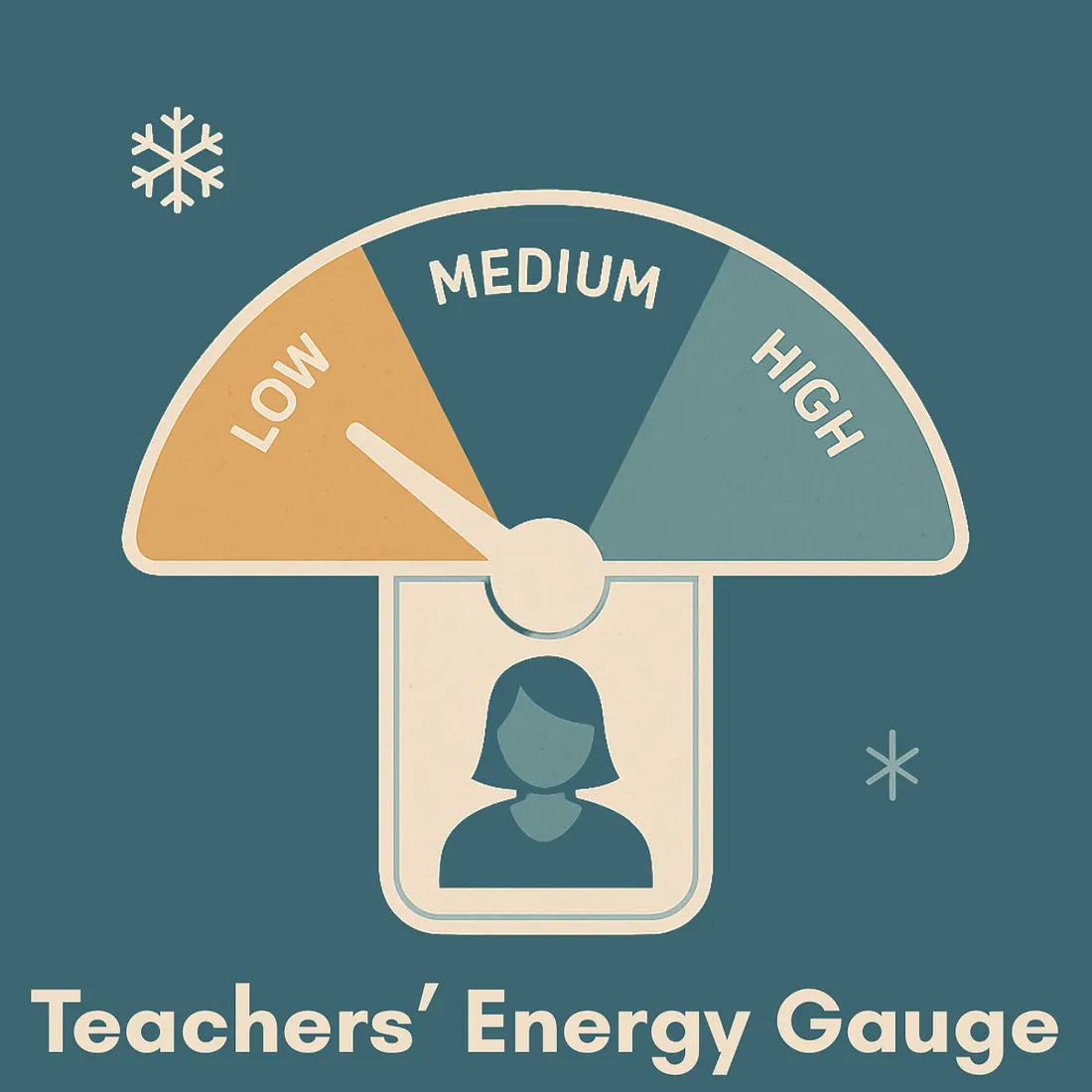
December has its own rhythm in schools, part festive, part frantic, and entirely exhausting. Between winter performances, last-minute assessments, behaviour wobbles, and endless admin, teachers often feel pressure to push harder just as their energy hits the lowest point of the year. But here’s the truth: you don’t need to finish the term at full speed. What you do need is an energy budget. A kinder, more intentional way to get through the final stretch without burning out.
Because in December, it’s not about doing more.
It’s about spending your limited energy where it truly matters.
1. What an “Energy Budget” Actually Means for Teachers
Just like money, your energy in December is finite.
And yet, teachers are often expected to operate as if the bucket is bottomless.
An energy budget simply helps you ask:
What genuinely needs my attention this week?
What can I do in a simpler, lighter way?
What can wait until January without consequences?
It’s not lowering your standards.
It’s professional discernment, choosing what’s essential so you don’t collapse before the holiday even begins.
To help you see this more clearly, think of your tasks in three categories:
High-Energy Tasks
Things that drain you quickly but can’t be avoided:
Behaviour escalations
Safeguarding or pastoral care
End-of-term assessments
Emotional support for anxious students
Medium-Energy Tasks
Important but manageable with structure:
Lesson planning
Classroom routines
Family communication
Marking priorities
Low-Energy Tasks
The things that look nice but aren’t essential:
Perfect displays
Rewriting lessons from scratch
Over-decorating your classroom
Optional committees and projects
Replying to every email instantly
Your goal: Protect your high-energy tasks, streamline your medium-energy ones, and minimise or postpone the low-energy group.
2. What Actually Matters in the Final Weeks of Term
When everything feels urgent, it helps to zoom out.
Here are the things that truly deserve your limited energy in December:
✔ Creating predictable routines
Students thrive on structure, especially when the season around them is chaotic.
✔ Building emotional safety in your classroom
December is harder than it looks for many pupils: overstimulation, disrupted routines, family stress.
Your calm is often their anchor.
✔ Essential assessments and progress checks
Not every piece of work needs deep marking right now. But the key assessments tied to reporting do deserve focused energy.
✔ Clear communication with families and your team
Simple, timely, and calm — no lengthy emails required.
✔ Your own wellbeing
Protecting your energy is not indulgent.
It’s professional maintenance.
Everything else? Negotiable.
3. What You Can Let Go of — Without Feeling Guilty
One of the kindest things you can do for yourself this month is release unnecessary expectations.
Here are some things you can absolutely put down:
❌ Perfect classroom displays
A functional classroom is enough.
Your students don’t need aesthetic perfection. What they need is presence.
❌ Overcomplicated festive activities
Stick to simple, structured tasks that don’t require hours of prep.
❌ Rewriting entire lesson plans from scratch
Reuse, adapt, simplify.
❌ Immediate replies to emails
A calm, next-day reply is entirely acceptable in December.
❌ Overthinking January
There will be time after the holiday to plan properly.
Right now, focus on finishing this term whole.
❌ Saying yes to every optional task
Boundaries are professional tools, not a lack of commitment.
Imagine how much energy you would save simply by letting go of the expectation to do everything perfectly.
4. A Low-Energy Teaching Week: What It Looks Like in Practice
Here’s how to build a teaching week that meets expectations without draining your last reserves.
A. Lean on Repeatable Routines
These are lifesavers in December.
Think:
Do Now starters
Mini whiteboards
Retrieval questions
Silent reading
Short discussion routines
Consistency = fewer behaviour issues and less planning time.
B. Reuse and Adapt What Already Works
Your existing lessons, slides, handouts, and tasks are not “cheating.”
They are efficient.
Replace: “I need something new.”
With: “What already works that I can reuse?”
C. Keep Planning Focused on Clarity, Not Creativity
In December, a clear objective is far more effective than a flashy activity.
Ask yourself: What’s the simplest way for students to learn this today?
Often the simplest answer is the right one.
D. Set One Non-Negotiable Boundary per Day
Examples:
No marking after 6pm
A 10-minute break at lunchtime
One evening a week with absolutely no schoolwork
Zero email replies outside working hours
Micro-boundaries create macro-stability.
5. How Dolly Helps Teachers Stay Within Their Energy Budget
Teachers already carry the emotional and cognitive weight of December.
Dolly simply reduces the administrative weight.
Here’s how:
✔ Faster Lesson Planning (Without Reinventing Everything)
Dolly provides prompts, structures, and ideas that help teachers start quicker and stay focused, especially when mental energy is low.
✔ Drafting Feedback and Assessments
Instead of spending evenings buried in marking, teachers can generate draft comments and refine them, saving valuable time.
✔ Light-Touch Quizzes and Retrieval Tasks
Great for low-energy days when lessons need clarity and structure.
✔ Curriculum Alignment Checks
Dolly helps ensure lessons still meet objectives, even when teachers are working with reduced capacity in the final weeks.
It’s not about doing more.
It’s about doing the essentials with less effort — so teachers have the energy to be fully present where it matters most.
6. A Kinder Way to End the Year
December doesn’t have to survive on adrenaline and guilt.
It can be navigated thoughtfully, gently, and with boundaries that protect your wellbeing.
A reminder as you move through the last stretch:
You are not falling behind.
You are not doing it wrong.
You are not supposed to be superhuman.
You are doing what teachers do best:
Showing up, caring deeply, and carrying far more than anyone sees.
This year, permit yourself to do less — not because you’re failing, but because you’re human.
Protect your energy.
Simplify where you can.
Use tools that lighten the load.
And if you want a calmer, more supported end to the term, let Dolly take some of the mental and administrative weight off your shoulders. You can reach the holidays not just standing, but steady.