AI in Education Is Not the Solution. But It Can Be Part of One
AI is everywhere in education right now.
Lesson planning.
Marking.
Reports.
Data analysis.
Depending on who you ask, it’s either the future of teaching or a risk to it.
But for most teachers in UK classrooms, the question isn’t whether AI is good or bad.
It’s much simpler:
Does this actually make the work more manageable?
The Problem Was Never a Lack of Tools

Teaching has never been short of tools.
What it has often been short of is:
time
energy
space to think clearly
Over time, teacher workload has increased, not because teachers lack effort, but because the system around them has become more demanding.
New AI for teachers or AI for teaching assistant tools don’t automatically solve that.
Sometimes, they add to it.
Where AI in Education Falls Short
Many AI tools for teachers focus on speed.
faster lesson plans
faster marking
faster content creation
And that can help. To a point.
But speed is not always the main problem.
The real challenge is what happens after:
understanding what pupils struggled with
deciding what to do next
finding time to respond consistently
AI can generate output.
It doesn’t automatically create clarity.
Teaching Is Not a Single Task
One of the reasons AI in education feels confusing is that teaching isn’t one thing.
It’s a combination of:
planning
instruction
assessment
reflection
follow-up
And each of these requires a different kind of thinking.
AI does not belong equally in all of them.
Where AI Can Actually Help Teachers
AI earns its place when it reduces load without replacing judgement.
For example:
generating structured starting points for planning
drafting feedback that teachers can refine
highlighting patterns in pupil responses
supporting follow-up decisions
These are not replacements for teachers.
They are ways of reducing cognitive load, especially during busy periods of the term.
This is where AI in education can genuinely support teacher workload, rather than adding to it.
Where AI Should Stay Out of the Way

There are parts of teaching that should remain fully human.
professional judgement
relationships with pupils
classroom responsiveness
knowing when to pause or push
These are not inefficiencies.
They are the work itself.
Any system that tries to replace these risks misunderstands what teaching actually is.
The Real Question to Ask
The question isn’t:
“Can AI do this?”
It’s:
“Does this help teachers teach or does it ask more of them?”
When AI:
reduces unnecessary effort
supports clarity
protects teacher energy
It belongs.
When it:
adds pressure
creates more decisions
demands constant interaction
It doesn’t.
A More Useful Way to Think About AI
AI is not the solution to education.
It cannot fix:
curriculum pressures
time constraints
systemic workload issues
But it can be part of a solution.
Especially when it is designed around how teachers actually work, not how technology expects them to work.
Where Dolly Fits
Dolly is still in its early stage.
We’re not trying to solve everything.
Right now, the focus is simple.
Supporting teachers with:
assignment creation
marking support
identifying learning gaps
enabling clearer follow-up
Not to increase pace.
Not to push productivity.
But to reduce the background load that builds across the term.
A Final Thought
AI will not fix education.
Teachers will.
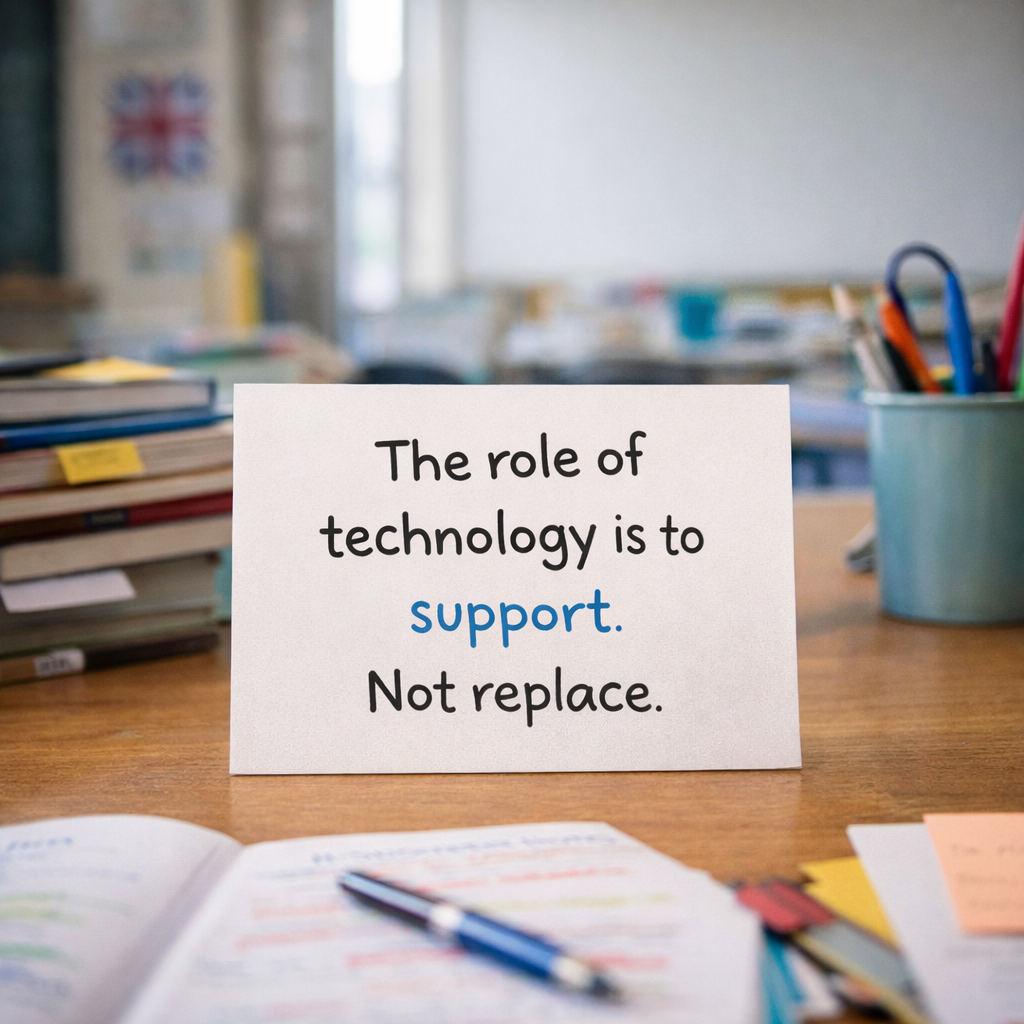
The role of technology is not to replace that work.
It’s to make it more sustainable.
A Small Reminder
If a tool makes your work clearer, lighter, or more manageable, it’s worth exploring.
If it makes things more complex, it’s not.
Dolly is being built alongside UK teachers to support planning, marking, and follow-up in a way that protects energy. Not consuming more of it.
If you’re curious about how Dolly supports teachers’ workload, you can explore more here → godolly.ai