Ending the Term Without Emptying Yourself: A Calmer Way to Finish the Spring Term

By mid-March, something shifts in the school year.
The term isn’t new anymore.
Energy isn’t fresh.
And the Easter break still feels just far enough away.
In many UK schools, this is when the work starts to feel heavier.
There are still lessons to plan.
Still books to mark.
Still gaps in learning to respond to.
But the sense of momentum from the start of term has faded. What remains is the quiet pressure to keep everything moving forward until the break arrives.
For many teachers, this is the point where the spring term begins to feel less like a steady rhythm and more like endurance.
Why the Final Weeks of Term Feel Heavier at the End of Term in UK Schools
The workload itself hasn’t necessarily changed.
What changes is cumulative effort.
Weeks of planning, teaching, marking, and decision-making slowly add up. Even small tasks start to require more energy than they did earlier in the term.
At this stage teachers are often balancing:
ongoing marking
preparing the next set of lessons
responding to learning gaps
keeping pace with the curriculum
supporting pupils who are also feeling tired
None of these responsibilities are new. But together they create a steady cognitive load that builds over time.
In many UK classrooms, teachers' workload tends to increase gradually during the final weeks before the Easter break, even when the schedule itself hasn’t changed dramatically.
This is why the final weeks before a break can feel surprisingly demanding.
The Quiet Pressure to “Push Through”
Teaching culture often celebrates resilience.
Teachers are used to finishing the term strong, keeping everything organised, and making sure pupils stay on track right up until the break.
But the expectation to simply “push through” can make the final stretch feel harder than it needs to be.
When energy is lower, trying to maintain the same pace as the beginning of the term often leads to more exhaustion rather than better outcomes.
A calmer approach doesn’t mean lowering standards. It means recognising that energy is part of the system teachers work within.
Managing teacher workload sustainably is not about doing less. It’s about deciding where effort is most valuable.

How to Manage Teacher Workload Before the Easter Break
Finishing the term steadily often works better than trying to finish it perfectly.
Some teachers find it helpful to focus on a few simple shifts during the final weeks:
1. Prioritise clarity over complexity
Lessons that are clear and well structured often serve pupils better than trying to introduce too many new elements at once.
2. Notice patterns instead of chasing every detail
Marking often reveals recurring misconceptions or partial understanding. Looking for patterns across the class can make follow-up decisions easier.
3. Accept that not everything must be solved immediately
Some gaps will need revisiting next term. Recognising that learning continues over time can reduce unnecessary pressure.
These small adjustments help maintain momentum without draining the limited energy teachers have left at the end of the term.
Where Systems Can Help
Much of the fatigue teachers experience doesn’t come from teaching itself.
It comes from the surrounding work: planning, marking, reviewing work, and deciding what needs attention next.
This is where tools designed for teachers can help. Not by replacing professional judgement, but by reducing the administrative load around it.
Many AI tools for teachers focus on speeding up tasks like marking or drafting materials. But the real value of AI in Education often lies in supporting the moments after that work is done.
For example:
Identifying patterns in pupil responses
Highlighting learning gaps
Helping teachers plan targeted follow-up
Dolly is still in its early stage, but it is being developed with this principle in mind: supporting the workflow around assignments, insight, and follow-up so teachers can spend more of their energy where it matters most: in the classroom.
A Final Thought
The end of term doesn’t have to be a sprint.
Teaching is a long-term profession built on sustained care, judgement, and attention. Protecting energy is part of making that work sustainable.
If the final weeks of term feel heavier than expected, that doesn’t mean something is wrong.
It simply means you’ve been carrying a lot.
Sometimes the most productive step is the simplest one:
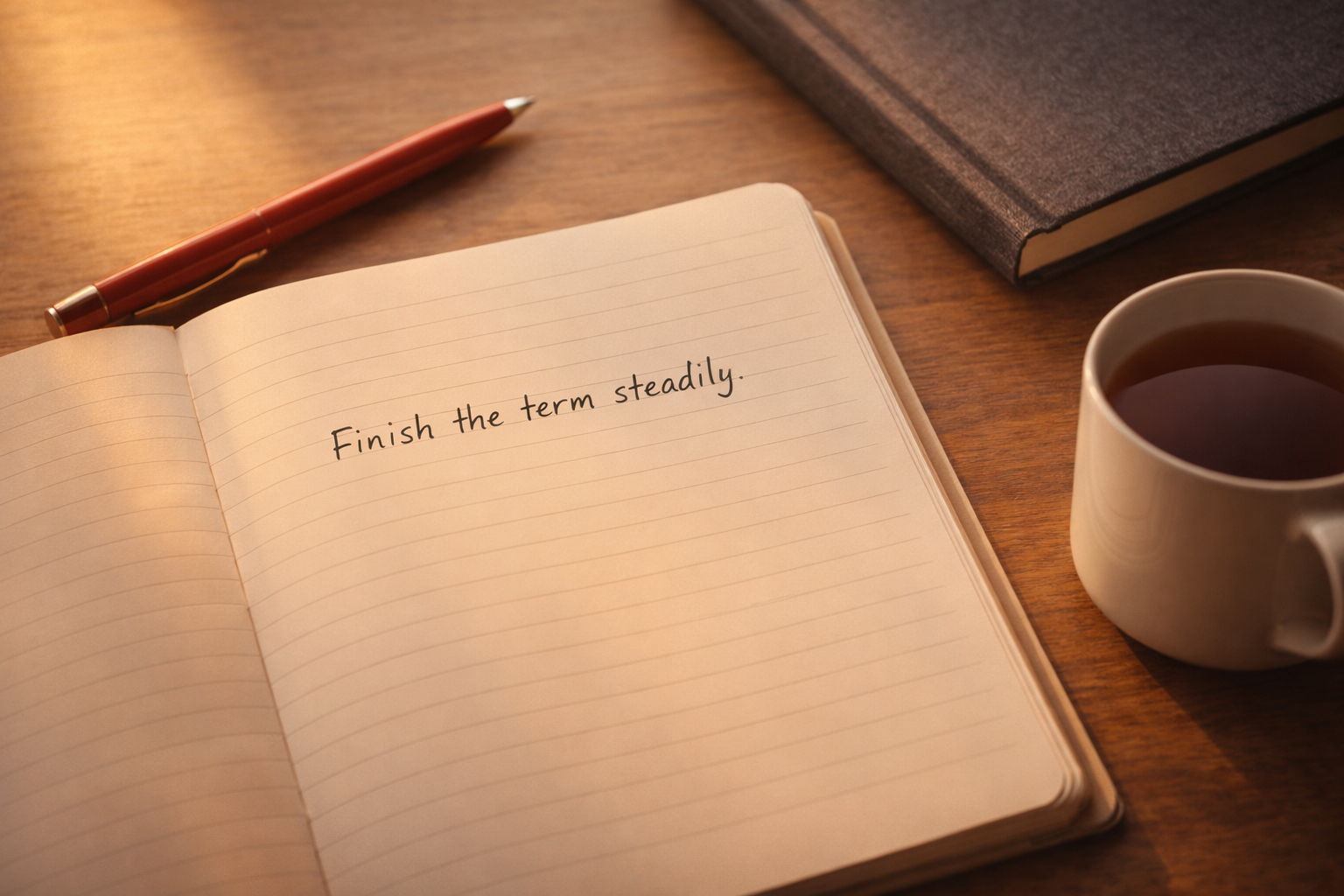
Finish the term steadily.
And leave the rest for tomorrow.
A Small Reminder
Teaching is demanding work, especially as the term draws to a close. Protecting your energy is not a luxury, it’s part of sustaining the profession.
If you are curious about how Dolly is evolving to support UK classrooms, you can explore more here at godolly.ai.